Room 4
Ms. Ferro taught first grade in Room 4 and she had been doing it for nineteen years.
She met Owen at seven forty in the morning, before the buses, in a classroom with alphabet cards over the whiteboard and a rug shaped like a map of the United States.
She had a folder ready on the desk, which told him she had been waiting for this conversation for most of a year.
"Mr. Hale," she said. "I want to start by telling you I called the numbers on file eleven times."
"You called the house."
"I called the house. I called the cell number on the emergency card. I sent three letters." She opened the folder. "I got a signature back every time and never once a voice."
"The cell number on the card." Owen took out his phone and turned it around. "Is it this one?"
Ms. Ferro looked. Then she looked again, and her jaw set.
"No," she said. "It is not."
She had a log.
It was not a diary, it was a teacher's log, dated and dry and devastating: a column for the date, a column for what she observed, a column for what she did about it.
Owen read nine entries.
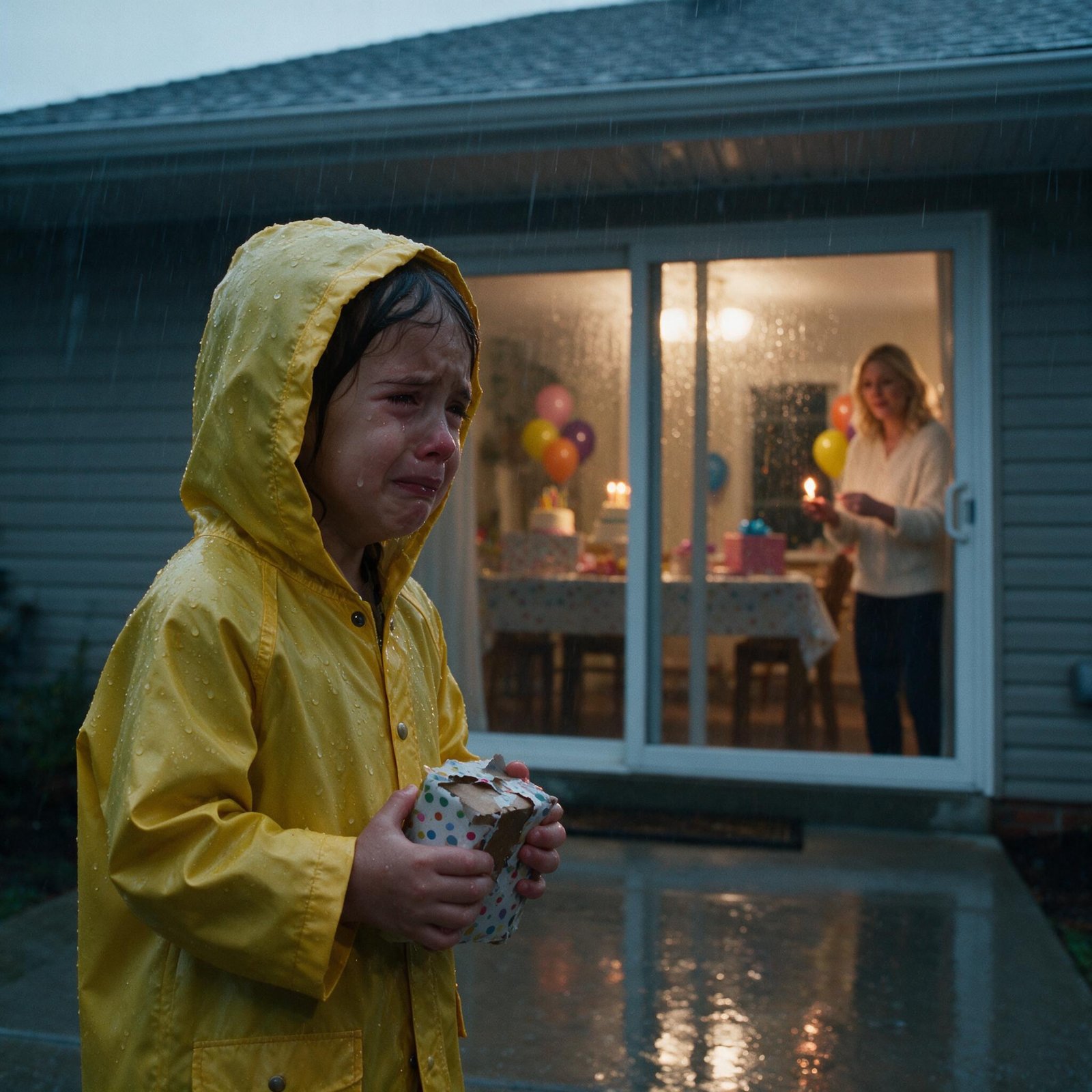
Nine mornings his daughter had come into Room 4 wet.
January 22. March 9. April 3. April 17. May 14. May 29. September 11. September 25. October 2.
He did not have to check his own schedule.
He knew before he counted them, and he counted them anyway, and every single one was a Wednesday or a Friday.
The mornings after his nights.
"She never said anything?" His voice came out wrong. "In all that, she never told you?"
"She told me the first time. She was five." Ms. Ferro's hands were folded on the desk. "She said she'd waited outside and that she was fine."
"And then?"
"A week later she told me she had made it up. After that she stopped telling me anything at all." The teacher's mouth went thin. "She started coming in early instead, to sit under the coat hooks by the radiator until her clothes dried."
Owen put his hand over his eyes.
"Mr. Hale. That is a six-year-old solving a problem alone. That is the part I have not been able to sleep about."
He asked her about the report.
Ms. Ferro turned to the last page in the folder.
"May sixteenth," she said. "Two days after the third letter. I went to the principal, the principal went to the district, and the district made a mandated report. That's not optional for us and it isn't discretionary. It went in."
"Then what happened?"
"Then a caseworker was assigned, and eleven days later the case was screened out."
"Screened out."
"Closed. No finding, no visit, no further action." She read from the page, flatly, in the voice of someone reading a thing she has read forty times. "Reporting party's concerns addressed by phone contact with the child's mother. Mother reports child plays outside and comes in wet. No indication of risk. Closed at intake."
The classroom was very quiet.
Somewhere down the hall a floor buffer started up.
"Phone contact with the child's mother," Owen said.
"That's what it says."
"Ms. Ferro." He heard his own voice come from a long way off. "I need you to look at that line again and tell me the exact word."
She looked.
"Mother," she said.
Owen sat in a first-grade chair that was too small for him, in a room with a rug shaped like America, and said the sentence out loud for the first time since the funeral.
"Sadie's mother died two years ago."
Ms. Ferro did not move for several seconds.
Then she got up, went to the door, and closed it — a woman of nineteen years' experience who had just understood that this conversation had stopped being about a wet coat.
"Then somebody took that call," she said.
"Somebody took that call."
"Mr. Hale." She sat back down and pulled the folder toward her and picked up her pen, and her hand was not entirely steady. "Who else in your house knows your wife's name?"
He looked up at her.
"That's the thing," Owen said. "Rachel's name is still on the emergency card."
Part 3 of 5 · The Stepmother Who Left Her Outside in the Rain